Car Maintenance & Repair · Oct 20, 2026
Oil in Intercooler Pipes: PCV Carryover, Duct Leak or Failing Turbo?
Oil in an intercooler hose does not automatically mean turbo failure. Compare PCV carryover, duct leaks, drain faults and real turbo damage.
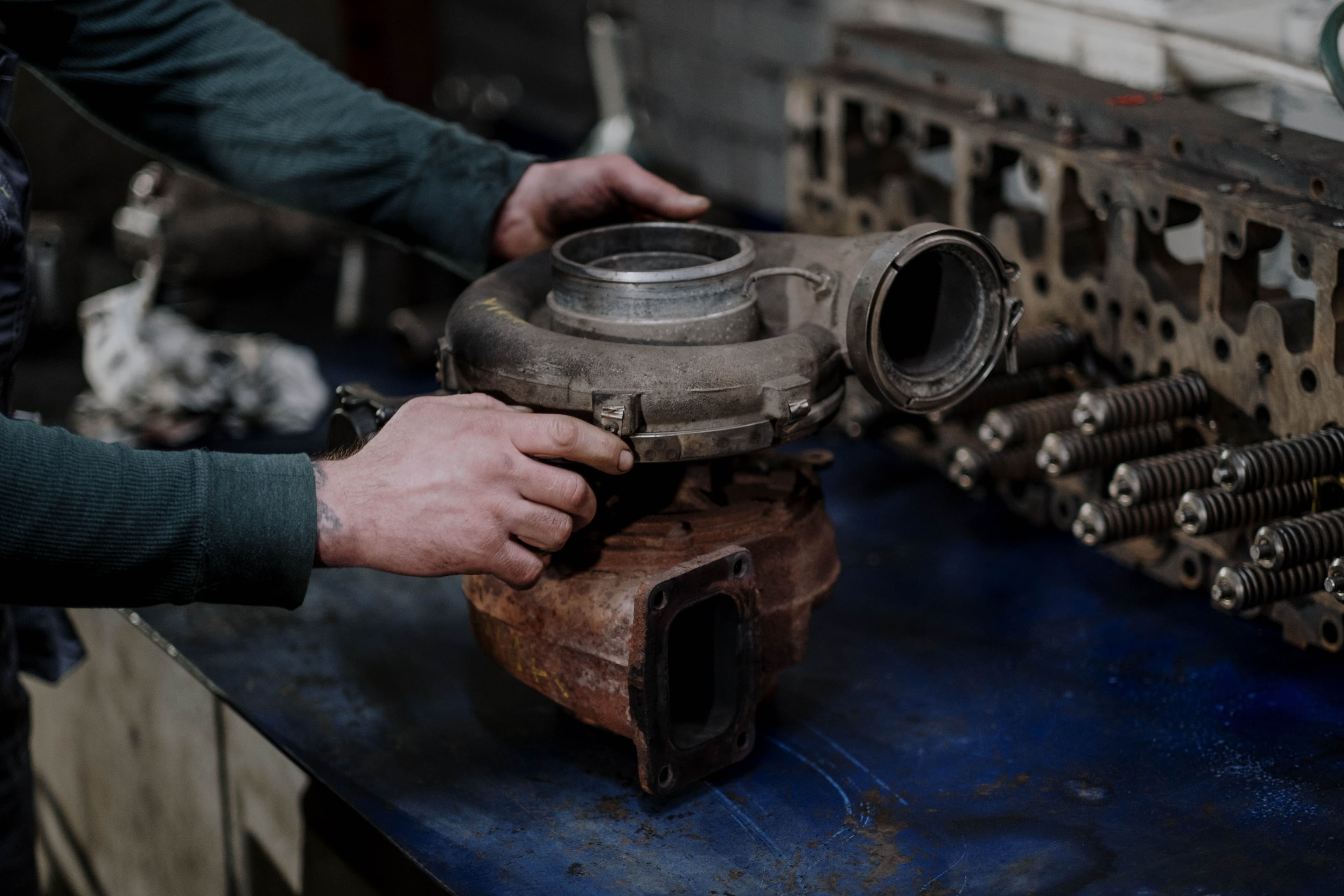
Oil inside an intercooler hose does not automatically mean the turbocharger has failed. A light film may come from crankcase-ventilation carryover, while pooling oil, rapid oil loss, compressor damage or persistent smoke requires deeper diagnosis. Inspect the entire intake, PCV and turbo oil system before ordering a replacement.
Start with the amount and location of the oil
“Oil in the intercooler” can describe anything from a thin coating inside a hose to liquid collecting in the bottom of the charge-air cooler. Those are not equivalent findings. Ask the technician to remove the affected duct safely, document the location and measure or estimate the amount recovered rather than judging the system from an oily connection alone.
Record:
- Whether the oil is a film, wet coating or pooled liquid
- Which duct or cooler connection contains it
- Whether oil is present before or after the turbo compressor
- Engine-oil level and recent consumption
- Blue smoke, misfire, runaway tendency or rough running
- Underboost or overboost diagnostic trouble codes
- Compressor-wheel condition and housing contact
- Crankcase pressure and PCV-system condition
- Oil feed and drain-line condition
- Recent turbo, PCV, engine or intake work
Mercedes-Benz XENTRY guidance published in August 2026 makes the central point directly for its covered applications: a light oil film in charge-air pipes or the cooler does not by itself confirm turbocharger or engine failure. It directs further inspection when oil is pooling, heavy accumulation is present, debris is found or oil has migrated farther into the intake. Apply the service information for the actual vehicle, not another manufacturer’s threshold.
How oil reaches the charge-air system
Crankcase-ventilation carryover
A closed crankcase-ventilation system routes blow-by gases back into the intake. A small amount of suspended oil can travel with that flow. Excessive carryover can increase when a separator, PCV valve, diaphragm, drain or hose malfunctions, or when crankcase pressure is higher than specified.
Cummins bulletin TSB210165, for specific natural-gas engine families, identifies both normal carryover and malfunctioning closed-crankcase ventilation components as possible causes of oil found at the turbocharger or charge-air piping. It is not a passenger-vehicle repair instruction, but it demonstrates why oil in the pipe is not proof of a failed turbo.
Turbocharger bearing or sealing problem
The turbo uses pressurized engine oil at its bearing housing. Internal wear, damaged wheels, housing contact or other confirmed mechanical damage can allow oil to enter the compressor or turbine path. The technician should use the manufacturer’s inspection procedure and limits; informal shaft “wiggle” checks are not a substitute for the specified measurement and operating diagnosis.
Restricted turbo oil drain
Oil must leave the turbo bearing housing through an unrestricted return path. A kinked, carboned, incorrectly routed or gasket-blocked drain can back oil up into the turbo even when the replacement unit itself is serviceable. Excess crankcase pressure can also oppose drainage.
Duct joint or clamp leak
Oil staining outside a hose connection may be escaped oil mist rather than a turbo housing leak. GM bulletin 17-NA-114 covers certain specified vehicles with oil leaking at turbocharger inlet or outlet duct connections and tells technicians to correct the charge-air pipe clamp condition rather than replace the turbocharger. The exact bulletin applies only to its listed vehicles, but the diagnostic distinction is broadly useful.
Symptoms that raise the urgency
A small film found during unrelated service may justify inspection and monitoring. Stop treating the condition as minor when it is accompanied by:
- A measurable drop in engine-oil level
- Liquid oil draining from the charge-air cooler
- Persistent blue exhaust smoke
- Compressor or turbine wheel damage
- Abnormal turbo noise
- Loss of power with verified boost-control faults
- Engine misfire caused by oil ingestion
- Signs that the engine could ingest enough oil to run uncontrollably
- Metal or other debris in the intake path
Do not repeatedly accelerate the engine to “clear it out.” A large quantity of oil in the intake can damage the engine. The system should be opened, inspected and cleaned only according to the vehicle maker’s procedure.
If blue smoke is the main complaint, the related guide on blue smoke from a turbo engine explains how smoke timing, engine wear, PCV faults and turbo oil drainage change the diagnosis.
Diagnostic checklist before replacing the turbo
A credible turbo diagnosis should connect the symptom to a failed component. Ask the shop to work through the applicable service procedure and document:
- Correct engine-oil level, grade and service history
- External oil leaks around covers, lines and turbo connections
- PCV valve, separator, diaphragm, hoses and drains
- Crankcase pressure under the specified test conditions
- Air-filter restriction and intake-duct condition
- Charge-air cooler and duct leaks
- Oil quantity and distribution throughout the charge path
- Turbo compressor and turbine wheel condition
- Oil feed pressure and feed-line restriction
- Oil drain routing, blockage and sealing
- Boost-control actuator or wastegate operation
- Engine compression or leak-down results when engine wear is suspected
GM bulletin 22-NA-067 is another useful model-specific example: on the listed vehicles it directs inspection for ice, water, oil or sludge at the charge-air bypass system and says not to replace the turbo when specified boost checks and turbo inspection do not reveal a turbo fault. That does not define the repair for other applications; it reinforces component-level testing.
Clean, repair or replace?
Cleaning and correcting a hose, clamp, PCV or drain fault may be enough when the turbo passes its prescribed inspection, oil accumulation is limited and no internal damage is found. The charge-air cooler and ducts still need the approved cleaning or replacement procedure; trapped oil left in the system can create smoke or another ingestion risk after repair.
Turbo replacement becomes more reasonable when the shop confirms wheel damage, housing contact, failed bearings, out-of-limit movement using the proper method, severe oil leakage attributable to the turbo, or another nonserviceable internal fault. The cause must be corrected at the same time. Installing another turbo without fixing a blocked drain, contaminated feed line, excessive crankcase pressure or foreign-object source can lead to repeat damage.
Used-turbo fitment and buying checklist
A turbo that looks similar may use a different housing, actuator, sensor or calibration. Before ordering:
- Provide the complete VIN and production date.
- Match the original turbo part number and identification plate.
- Confirm engine code, displacement and fuel type.
- Identify single-, twin- or variable-geometry configuration.
- Match compressor and turbine housing connections.
- Compare oil-feed, oil-drain and coolant-port locations.
- Verify wastegate or variable-geometry actuator type.
- Match electrical connectors and position sensors.
- Ask which actuator, lines, shields and fittings are included.
- Confirm whether actuator setup, calibration or relearn is required.
- Plan the specified gaskets, seals, fasteners, oil and filter.
- Inspect and clean the intake and charge-air system before startup.
Use the VIN decoder as a starting point, then have the installer verify the original turbo number and manufacturer interchange data. When you request a parts quote, include photos of the identification plate and connections along with the written diagnosis.
Quick answers
Is a light oil film in an intercooler hose normal?
It can occur from crankcase-ventilation carryover on some engines. The manufacturer’s criteria, oil quantity, consumption, smoke and turbo condition determine whether it is acceptable.
Does oil dripping from a hose clamp mean the turbo is bad?
Not necessarily. A loose or damaged duct connection can allow oil mist to escape. Inspect the joint, PCV system, oil quantity and turbo before replacing the unit.
Should the intercooler be cleaned after a turbo failure?
Follow the exact service procedure. Oil, metal or wheel debris may require cleaning or replacement of affected ducts and the cooler. Reusing contaminated parts can threaten the replacement.
Can a bad PCV system damage a turbo?
A PCV fault can raise crankcase pressure or increase oil carryover, interfering with turbo oil drainage and contaminating the intake. Diagnose and correct it before installing another turbo.