Car Maintenance & Repair · Oct 18, 2026
Blue Smoke From a Turbo Engine: What to Diagnose Before Replacing the Turbo
Blue smoke may come from the turbo, PCV system, oil drain or engine wear. Learn what to diagnose before ordering a replacement.
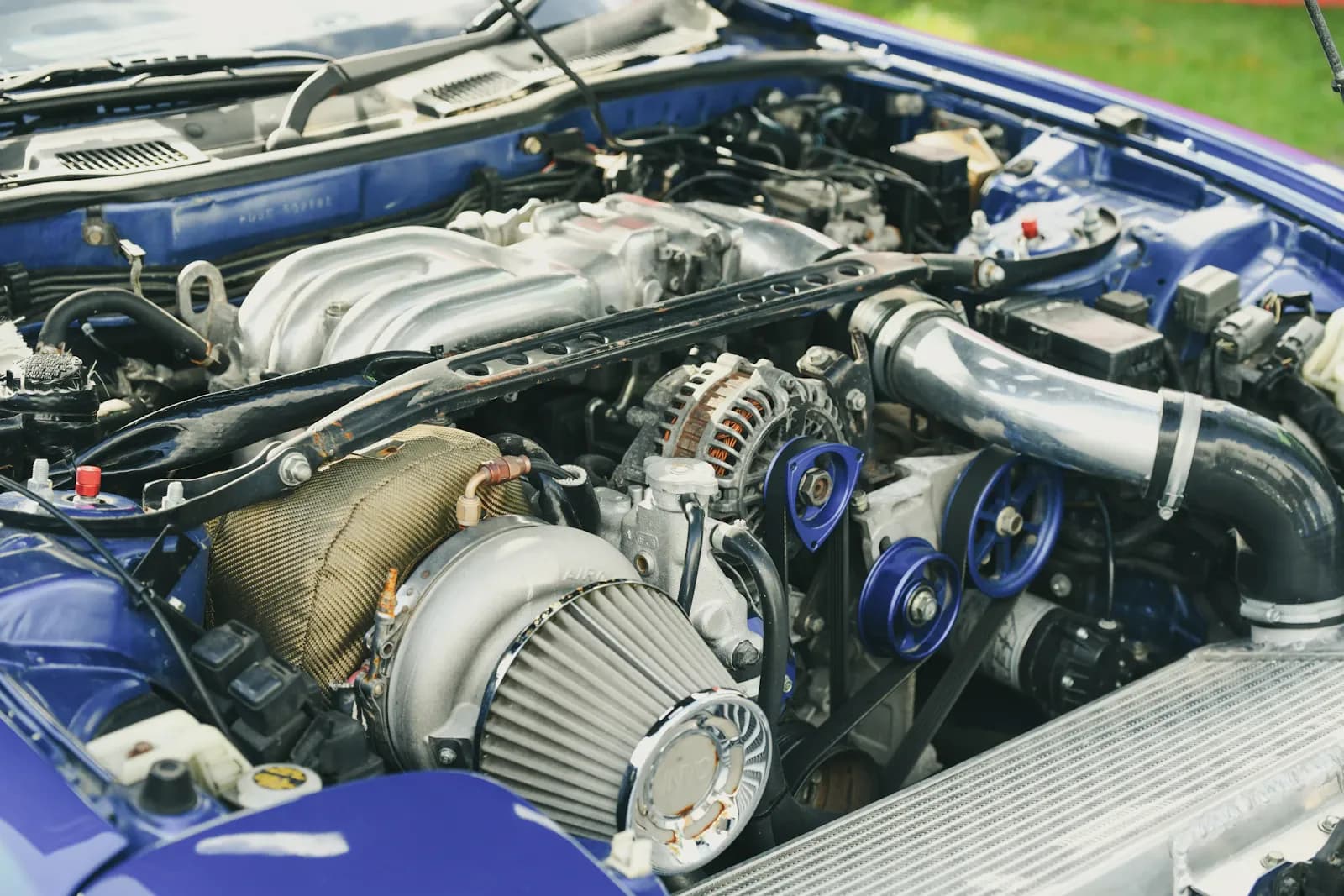
Blue exhaust smoke or rising oil consumption does not prove that the turbocharger has failed. Oil can enter the intake or exhaust through a turbo, but crankcase-ventilation faults, restricted oil drainage, incorrect oil level, engine wear and other leaks can create similar symptoms. Diagnose the oil path before ordering a replacement turbo.
Record when the smoke appears
The timing and operating conditions help narrow the search. Tell the technician whether smoke appears:
- Only after a cold start
- After idling for several minutes
- During acceleration or boost
- After deceleration
- Continuously at operating temperature
- Only after an oil service
- Together with low power, noise or a warning light
Also record how quickly the oil level changes, whether an external leak is present and whether the engine recently received turbo, PCV, intake or cylinder-head work. Smoke color is useful context, but it is not a final diagnosis.
Confirm that oil is actually being consumed
Before blaming the turbo, the shop should verify the oil level using the manufacturer’s method and the correct oil specification. Overfilling, an inaccurate electronic reading or inconsistent measurement conditions can make an oil-consumption complaint difficult to interpret.
BMW service information for specified N63TU applications lists several possible oil-consumption contributors, including turbochargers, crankcase ventilation, external gasket leaks, internal engine sealing and improper filling. Its diagnostic approach reinforces an important point: oil consumption is a system-level symptom, not an automatic turbo diagnosis.
Ask the shop to document:
- Starting oil level and measurement method
- Correct oil grade and specification
- Distance and operating conditions during the test
- External leaks found and repaired
- Amount of oil added
- Evidence of oil in the intake, charge-air or exhaust path
- Engine-test results where relevant
How the turbo can contribute to smoke
A turbocharger uses engine oil to lubricate and cool its bearing system. Oil must arrive through the feed circuit and drain back to the engine through an unrestricted return path.
Oil at the compressor or turbine side can be associated with turbo bearing or sealing problems, but it can also appear when the drain is restricted or crankcase pressure opposes oil return. That is why the technician should inspect the whole lubrication and ventilation system instead of judging the turbo from smoke alone.
The inspection may include:
- Turbo shaft condition using the manufacturer’s procedure
- Compressor and turbine housing for contact or damage
- Oil feed pressure and feed-line restriction
- Drain-line routing, kinks, coking and gasket intrusion
- Crankcase pressure and ventilation operation
- Oil in charge pipes, intercooler and turbine outlet
- Exhaust restriction
- Engine blow-by and internal sealing condition
A small oil film in part of the intake system may not by itself establish failure. The acceptable condition and test method depend on the engine and turbo design.
Check crankcase ventilation before buying a turbo
The crankcase-ventilation system manages pressure and routes blow-by gases. If it is restricted, leaking or controlling pressure incorrectly, oil consumption and smoke can result. Excessive crankcase pressure can also interfere with turbo oil drainage.
Ford TSB 16-0110 for certain 2015–2016 Lincoln MKC vehicles with the 2.3-liter GTDI engine addresses heavy blue smoke after extended idling and directs technicians to inspect a specific crankcase vent oil-separator configuration. The bulletin applies only to the listed vehicles and build dates, but it demonstrates that a smoke complaint can require a ventilation-system repair rather than a turbo.
BMW bulletin SI B11 07 12 likewise describes oil consumption, rough running and white or blue smoke on specified N63 applications where crankcase-ventilation lines could become brittle. These examples are not universal fixes; they show why PCV and breather components belong in the diagnosis.
Do not overlook engine wear
Worn piston rings, damaged cylinder walls, valve-stem sealing problems or other internal engine faults can burn oil and produce blue smoke. A turbo replacement will not correct an engine that is passing oil through its cylinders.
GM preliminary information PIP5680D for the 2016 Cadillac ATS with the 3.6-liter LF4 engine illustrates the decision process. It directs technicians to inspect turbo outlets for oil and, if that evidence is absent, evaluate PCV operation and crankcase pressure; the bulletin also discusses possible piston-ring and cylinder-bore wear in the covered application.
Depending on the vehicle and symptoms, the shop may use compression, cylinder leak-down, borescope, crankcase-pressure or other manufacturer-specified tests. The article does not set pass/fail limits because those values and procedures are application-specific.
Oil in the intercooler needs careful handling
Oil found in a charge pipe or intercooler should be evaluated by quantity, source and vehicle-specific guidance. If a turbo has passed significant oil or debris downstream, the intake and charge-air system may need cleaning or component replacement before the engine is started.
On a diesel engine, accumulated combustible oil in the charge-air path can present a serious uncontrolled-engine-speed hazard. Do not start or repeatedly rev the engine to “clear it out.” Have a qualified shop follow the manufacturer’s procedure.
If turbo replacement is confirmed, use the oil-line, intercooler and priming checklist to plan the installation and protect the replacement.
What to ask before ordering a used turbo
Request a written diagnosis that states:
- Where oil was found
- Whether the turbo wheels or housings are damaged
- Whether shaft condition was outside the applicable specification
- Whether feed pressure and drain flow were checked
- Whether crankcase pressure and ventilation were tested
- Whether engine wear was evaluated
- Whether the intake, intercooler and exhaust need cleaning
- Which related fault caused or contributed to the failure
- Whether an actuator, manifold or related hardware is needed
Once replacement is confirmed, start with the VIN decoder, then have the installer match the original manufacturer number, OEM number, engine code, housing orientation, flanges, oil and coolant ports, actuator type and electronic connector.
When you request a parts quote, provide the VIN, complete original turbo number, confirmed failure description, actuator requirements and clear photos of the identification plate and connections.
Used-turbo buying checklist
Before approving the unit, confirm:
- Exact part-number match or documented interchange
- Correct turbo position on multi-turbo engines
- Compressor and turbine housings are undamaged
- Wheels show no visible foreign-object damage
- Ports and openings were protected in storage
- Actuator and wastegate hardware included or excluded
- Manifold, sensors, lines and heat shields included or excluded
- Installer-approved oil-feed and drain service plan
- New gaskets, seals and one-time-use fasteners required
- Priming, calibration and startup requirements
- Packaging that protects the shaft, wheels and housings
Do not rotate, adjust or disassemble a used turbo to perform informal testing. Have the installer evaluate it using the manufacturer’s method.
Quick answers
Does blue smoke always mean a bad turbo?
No. A turbo can pass oil, but crankcase ventilation, restricted oil drainage, overfilling and internal engine wear can cause similar symptoms.
Can a blocked turbo drain cause smoke?
Yes. A restricted or poorly routed return can prevent oil from draining correctly. The technician should inspect the drain and crankcase pressure before condemning the turbo.
Is oil in the intercooler proof of turbo failure?
Not by itself. The amount, source, engine design and service procedure matter. Significant oil or debris requires professional inspection before startup.
Should I replace the turbo and PCV system together?
Only if diagnosis and the vehicle-specific repair procedure support both repairs. Do not add parts without evidence, but do not ignore a ventilation fault that could damage the replacement.