Car Maintenance & Repair · Oct 16, 2026
Turbo Underboost: What to Diagnose Before Buying a Replacement
Learn how boost leaks, restrictions, wastegates, actuators, sensors and engine faults can imitate a failed turbo before buying a replacement.
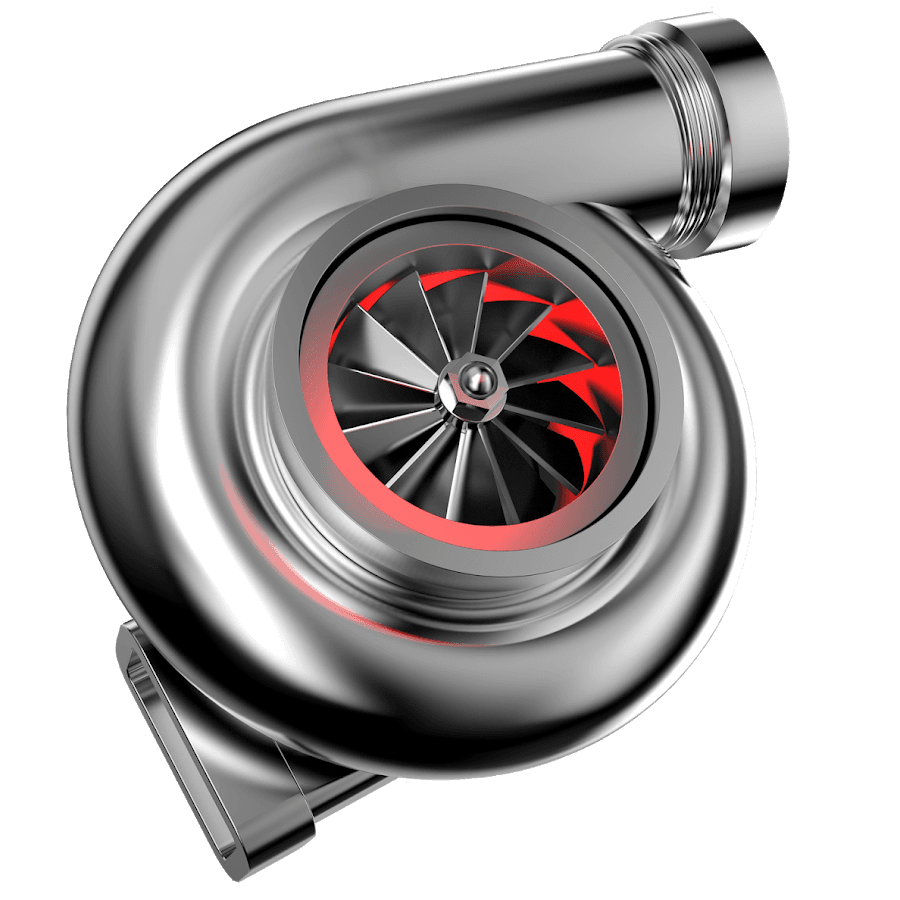
An underboost code or low-power complaint does not automatically mean the turbocharger needs replacement. Before buying a used turbo, have the system tested for intake and charge-air leaks, restrictions, wastegate or variable-vane control faults, sensor problems, exhaust leaks, and engine-condition issues. The replacement decision should follow evidence, not the code description alone.
What “underboost” actually means
Underboost means measured boost pressure did not reach the level the engine control system expected under the monitored conditions. It describes a result, not a failed component.
The system may include an air filter, inlet duct, compressor, charge pipes, intercooler, throttle or intake assembly, pressure and airflow sensors, exhaust manifold, turbine, wastegate or variable-geometry mechanism, actuator, control valve, vacuum or pressure hoses, wiring, and engine-management software. A fault anywhere along that path can reduce measured boost.
Ask the technician to record the exact diagnostic trouble codes, freeze-frame data, related codes, commanded boost, measured boost, engine speed, load, airflow, temperatures, and actuator command where the vehicle provides those values.
Start with leaks and restrictions
BorgWarner’s turbocharger troubleshooting guidance lists cracked or loose intake components, leaking pressure lines, dirty filters, restricted charge-air coolers, and exhaust leakage among possible causes of low power or low boost. Garrett likewise recommends a system-level diagnosis before replacement.
A charge-air leak can open only under pressure, so a hose that looks acceptable at rest may still split, lift from a fitting, or leak at a clamp under load. The proper test depends on the vehicle. A repair manual may specify a smoke test, regulated pressure test, scan-tool routine, or visual and tactile inspection.
The shop should inspect:
- Air-filter condition and airbox sealing
- Turbo inlet pipe for cracks, collapse, loose joints, or obstruction
- Compressor outlet connection
- Charge pipes, couplers, O-rings, and clamps
- Intercooler core and end tanks
- Intake manifold and throttle-body joints
- Boost-pressure and airflow sensor installation
- Exhaust manifold and pre-turbine joints
- Vacuum, pressure, and control hoses
Do not apply generic test pressure to the system. Manufacturer procedures specify safe equipment, isolation points, and pressure limits for the application.
Compare commanded boost with actual boost
Scan data can show whether the control system is requesting boost and whether the engine is producing it. The useful parameters vary, but the technician may compare desired or commanded boost, measured manifold pressure, barometric pressure, airflow, actuator position or command, exhaust-pressure data, and engine load.
Interpretation must account for atmospheric pressure, altitude, temperature, gear, engine speed, and operating mode. A single idle reading is not a complete turbo test. Some faults appear only under controlled load, while others place the engine in a reduced-power strategy that limits the test itself.
If a sensor reports implausible pressure before the engine is loaded, diagnose the sensor, wiring, reference voltage, ground, hoses, or ports before blaming the turbo.
Wastegate, actuator, and variable-vane faults
Turbo systems regulate boost in different ways. A wastegate bypasses exhaust around the turbine. A variable-geometry turbo changes vane position to control exhaust flow. Actuation may use vacuum, pressure, an electric motor, or a combination of components.
Low boost can occur when:
- A wastegate is stuck or held open
- A control hose is disconnected, cracked, restricted, or routed incorrectly
- A vacuum supply is weak
- A boost-control solenoid or valve does not respond
- An electronic actuator, position sensor, connector, or wiring has a fault
- Variable vanes are restricted or cannot reach the commanded position
- Linkage is damaged or disconnected
- The actuator requires initialization or calibration after service
Do not shorten an actuator rod, adjust a stop screw, or alter a calibrated setting as a shortcut. Turbo manufacturers warn that incorrect adjustment can cause improper boost control and damage. Use the vehicle and turbo manufacturer’s procedure.
Exhaust faults can reduce turbine energy
The turbine depends on exhaust-gas energy. A leak upstream of the turbine can reduce the energy reaching it. A restricted exhaust path downstream may also disrupt performance and can contribute to heat or pressure problems.
Inspect the exhaust manifold, gaskets, fasteners, EGR connections where applicable, turbine inlet, and related piping. Soot trails can help locate leakage on diesel applications, but inspection should follow the service manual. Also check whether a catalyst, particulate filter, muffler, or other component is restricted when diagnostic evidence points that way.
Fueling, ignition, injection, valve timing, compression, and cylinder-balance problems can reduce exhaust energy or airflow. A healthy turbo cannot create the commanded boost if the engine is not producing the required flow.
When physical turbo damage supports replacement
Replacement becomes more defensible when inspection finds direct evidence such as:
- Compressor- or turbine-wheel damage
- Housing contact marks
- Foreign-object damage
- Shaft movement outside the manufacturer’s specified limits
- Seizure or restricted rotation
- Cracked or damaged housing
- Failed wastegate or variable-geometry hardware that is not separately serviceable
- Confirmed internal oil leakage after crankcase pressure, feed, and drain causes are ruled out
- Actuator failure when the service strategy requires the complete calibrated unit
- Persistent boost-performance failure after external causes are tested and eliminated
Some radial movement can be normal on certain journal-bearing turbochargers when oil pressure is absent, while contact, binding, or axial movement may be more significant. Do not use a generic “wiggle test” as the sole diagnosis; compare measurements and observations with the turbo manufacturer’s specification.
Oil around the turbo is not automatic proof of failure
Oil in an inlet or charge pipe can come from crankcase ventilation, engine blow-by, overfilling, a restricted drain, excess crankcase pressure, or turbo bearing and sealing problems. A light film and a pooled quantity do not mean the same thing.
The technician should check:
- Engine-oil level and correct specification
- Crankcase-ventilation operation
- Crankcase pressure
- Turbo oil-feed condition
- Oil-drain routing and restriction
- Engine compression or cylinder condition when indicated
- Quantity and location of oil in the intake and charge-air system
- Smoke pattern and oil-consumption evidence
If the turbo has mechanically failed or passed substantial oil or debris downstream, the intake, charge pipes, and intercooler must be inspected before the engine is restarted.
Use the failure evidence to choose the repair scope
A torn coupler may need a hose and clamp, not a turbo. A failed control solenoid may need electrical or vacuum-system repair. A separately serviceable actuator may require the correct actuator and calibration procedure. A damaged rotating assembly or non-serviceable internal mechanism can support complete turbo replacement.
If replacement is confirmed, the related turbo installation checklist explains why the oil supply, drain, intercooler, intake, exhaust, and priming procedure must be addressed before startup.
Match a used turbo precisely
Begin with the complete VIN and exact engine configuration. The VIN decoder can help organize the basic vehicle identity, but the turbocharger’s identification plate and original equipment data remain essential.
Verify:
- Turbo manufacturer and complete part number
- OEM part number and suffix
- Engine code, displacement, fuel type, and output version
- Single-, twin-, or sequential-turbo position
- Compressor and turbine housing orientation
- Inlet, outlet, flange, and mounting configuration
- Oil-feed, oil-drain, and coolant-port locations
- Wastegate or variable-geometry design
- Actuator type, connector, linkage, and calibration requirements
- Sensors, manifold, heat shields, and attached components included
- Any documented supersession or interchange
A visually similar housing does not establish compatibility. An electronic actuator attached to a used turbo may still require setup, and an actuator from another unit should not be assumed correctly calibrated.
Underboost diagnostic checklist for buyers
Before requesting a replacement turbocharger, obtain:
- Exact fault codes and freeze-frame data
- Commanded-versus-measured boost results
- Intake and charge-air leak-test results
- Air-filter and intercooler restriction findings
- Sensor, wiring, and connector checks
- Wastegate, vane, actuator, solenoid, and hose test results
- Vacuum or pressure-supply results where applicable
- Exhaust-leak and restriction findings
- Engine compression, fueling, ignition, or injection findings when relevant
- Physical turbo inspection results
- Root-cause explanation for oil, debris, heat, or foreign-object damage
- Complete turbo and OEM part numbers
- Installer’s programming, calibration, priming, and cleanup plan
When those facts confirm replacement, include them with a turbocharger quote request. Part numbers and label photos help distinguish the required unit from another turbo used on the same model.
Frequently asked questions
Does code P0299 always mean the turbo is bad?
No. P0299 is commonly associated with an underboost condition, but the cause can be a leak, restriction, sensor, control system, wastegate, actuator, exhaust, engine, or turbo fault. Diagnose the system using vehicle-specific service information.
Can a boost leak damage the turbo?
A leak can make the control system work harder to reach the requested pressure, depending on the strategy. The immediate priority is to locate and repair the leak and then verify that the turbo stayed within acceptable operating conditions.
Can I replace only the turbo actuator?
Sometimes. Serviceability and calibration vary. Some actuators are supplied separately; others are matched to the turbo or require guided setup. Confirm the approved repair for the exact part number.
Does black smoke prove turbo failure?
No. Black smoke can involve insufficient air, charge-air leakage, intake restriction, fueling or injection faults, exhaust problems, control faults, or turbo damage. Combine the smoke pattern with codes, data, and inspection.
Should I buy a used turbo before the leak test?
No. A leak or control fault may be the actual repair, and unresolved system faults can also damage or misdiagnose the replacement.
Diagnose the air path before replacing the turbo
Underboost is a system performance problem until testing isolates the failed component. Check airflow, charge-air sealing, control hardware, sensors, exhaust flow, and engine condition before ordering. If the turbo itself is confirmed faulty, use the original identification and a documented installation plan to select the replacement.