Car Maintenance & Repair · Oct 14, 2026
Is the Transfer Case Binding? Check the Tires and 4WD Mode First
Diagnose 4WD binding before buying a transfer case by checking drive mode, tire matching, codes, fluid and exact assembly fitment.
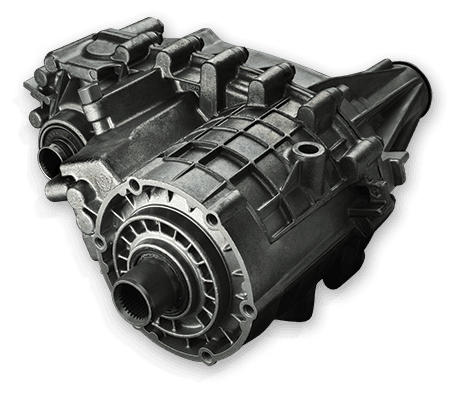
A binding or “crow-hopping” sensation in a tight turn does not automatically prove that the transfer case has failed. Before buying a replacement, verify the selected drive mode, tire matching, diagnostic codes, fluid condition and the exact assembly identification. A condition outside the case can create symptoms that feel like an internal mechanical fault.
This guide focuses on diagnosis before purchase. If the repair recommendation is still unclear, first review the distinction between a complete transfer case and its shift motor.
What transfer-case binding can feel like
Drivers may describe binding as tire scrubbing, hopping, resistance, a shudder or the feeling that the brakes are dragging during a slow, tight turn. Those observations help a technician reproduce the concern, but they do not identify the failed part by themselves.
The operating mode matters. In a mechanically locked four-wheel-drive mode, the front and rear driveshafts are coupled. On a high-traction surface, the driveline may not be able to release the speed difference that naturally develops between the front and rear wheels in a turn.
Ford’s current four-wheel-drive owner guidance, for example, says its covered 4H and 4L modes are intended for consistently slippery or loose surfaces, not dry hard-surfaced roads. It also notes that using those modes on dry pavement can produce noise, increase tire wear and damage drive components. That instruction is vehicle-specific, so use the owner’s manual for the exact year, make, model and drivetrain rather than applying one brand’s procedure to every 4WD or AWD system.
Check the drive mode before condemning the assembly
Write down the mode shown on the selector and instrument panel when the symptom occurs. Also record whether the vehicle recently shifted between 2H, 4H, 4L or an automatic mode.
Ask the technician to confirm:
- whether the commanded mode matches the mode reported by the control system;
- whether the concern happens only on dry pavement or also on a loose surface;
- whether the transfer case completes the requested shift;
- whether any warning message or diagnostic trouble code is stored; and
- whether the system is mechanically locked, clutch-controlled or a different AWD design.
Do not attempt a mode-change procedure copied from another vehicle. Shift speeds, transmission position, brake use and neutral requirements vary. Follow the original manual and service information for the vehicle being repaired.
Four matched tires are part of the diagnosis
Tire size on the sidewall is only the starting point. Actual rolling circumference can differ because of brand, model, tread depth, inflation pressure or an incorrectly sized spare.
Ford’s 4WD guidance warns that a significantly different spare can cause limited four-wheel-drive operation, added noise, difficulty leaving a mechanically locked mode and driveline damage. Its AWD guidance also recommends minimizing tire-size differences and using the same size, type, brand and model across all four positions for the vehicles covered by that manual.
Before ordering a transfer case, have the shop record:
- the complete tire size at all four corners;
- tire brand and model;
- tread depth on each tire;
- cold inflation pressure;
- whether a temporary or full-size spare was recently used; and
- whether the symptom began after one or two tires were replaced.
A matching sidewall label does not by itself establish matching circumference. The technician should evaluate the tires according to the vehicle manufacturer’s limits and service procedure.
Inspect the rest of the driveline
A transfer-case complaint can overlap with faults elsewhere in the driveline. The inspection should consider front and rear driveshafts, universal or constant-velocity joints, axle assemblies, differentials, mounts and wheel or tire conditions. The purpose is not to replace parts speculatively, but to isolate the source before purchase.
Ask whether the shop found leaks, contaminated or low fluid, metal debris, excessive play, damaged splines or a noise that can be localized to the case. Fluid type and level-check procedure are application-specific; using a generic fluid recommendation can create another problem.
If the shop identifies a separate control, sensor or actuator fault, confirm whether that component is included with a used assembly. Listing photographs may show attached hardware that is not part of the sale.
Confirm the replacement by more than year and model
A vehicle line can use different transfer cases across engine, transmission, wheelbase, production date and drivetrain configurations. Begin with the VIN decoder to collect vehicle details, then have the installer verify the original unit’s identification tag, stamped number, connector layout, input and output arrangement, and applicable interchange information.
Before approving a used unit, compare:
- original assembly number and proposed interchange;
- transmission and drivetrain configuration;
- input and output spline or flange arrangement;
- electrical connectors and sensors;
- shift motor or actuator inclusion;
- mounting points and attached brackets; and
- what must be transferred from the original assembly.
The VIN is useful, but it may not reveal every assembly-level variation. The installer should approve the proposed interchange before shipment.
Buyer checklist before requesting a quote
Gather the following information:
- Full VIN and current mileage.
- Exact dashboard messages and diagnostic codes.
- The shop’s written diagnosis and requested repair.
- Original transfer-case tag or casting numbers.
- Photos of the original connectors, flanges and mounting points.
- Engine, transmission and 4WD/AWD configuration.
- Tire size, brand, model and tread-depth measurements.
- A written list of included hardware on the replacement.
- Required seals, fluid and installation supplies.
- The seller’s applicable shipping, return and warranty terms.
When the diagnosis and identification are complete, request a transfer-case quote with the shop’s specifications rather than describing only the symptom.
Quick answers
Can mismatched tires damage a transfer case?
They can contribute to driveline stress or system malfunction on vehicles whose manufacturer requires closely matched tires. The acceptable difference is vehicle-specific, so the technician should use the manufacturer’s published limit.
Does binding in a parking-lot turn always mean failure?
No. Selected mode, road surface and tire mismatch can affect the symptom. A qualified diagnosis should confirm the cause before an assembly is ordered.
Is AWD the same as part-time 4WD?
No. System designs and operating rules differ. A warning against using a mechanically locked 4H or 4L mode on dry pavement should not be generalized to every automatic AWD system.
Should a used transfer case include the shift motor?
Do not assume it does. Ask for a written included-parts list and actual-unit photographs, then compare them with the installer’s repair plan.