Ford · Oct 25, 2026
Ford 1.5L EcoBoost Coolant Intrusion: Short Block or Used Engine?
How to confirm 1.5L EcoBoost coolant intrusion and choose between Ford's short-block repair and a correctly matched replacement engine.
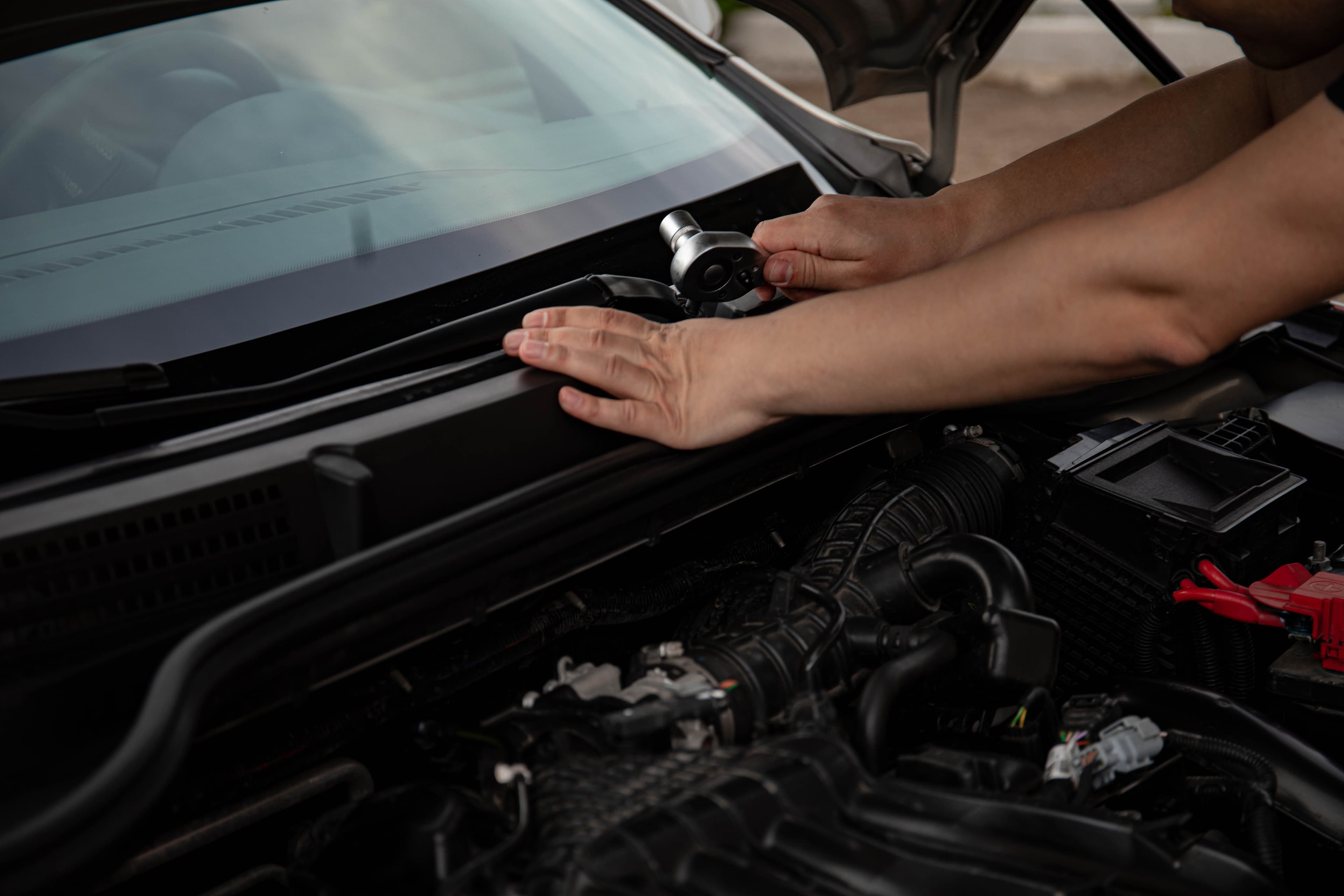
Ford documented cylinder coolant intrusion on certain 1.5L EcoBoost Fusion and Escape vehicles. The key buying decision is not simply “used engine or head gasket.” First confirm that coolant is entering a cylinder, identify the exact engine and build date, and understand that Ford's published repair replaces the short block and head gasket—not automatically the complete engine.
Which 1.5L EcoBoost vehicles does Ford's bulletin cover?
Ford Technical Service Bulletin 20-2100, dated April 1, 2020, applies to:
- 2014–2019 Ford Fusion vehicles built on or before June 10, 2019 with the 1.5L EcoBoost.
- 2017–2019 Ford Escape vehicles built on or before April 8, 2019 with the 1.5L EcoBoost.
The build-date limits matter. A model-year match alone does not establish that the bulletin applies, and a similar symptom on a different engine must be diagnosed separately. Use the VIN decoder to confirm the vehicle identity, then check the door-jamb certification label and Ford service information for the production date and engine application.
The primary reference is Ford TSB 20-2100, hosted by the National Highway Traffic Safety Administration.
What symptoms did Ford identify?
Ford says an affected vehicle may have a low coolant level, white exhaust smoke, or a rough-running condition, with or without an illuminated malfunction indicator lamp. The bulletin limits the relevant stored codes to P0300, P0301–P0304, P0316, P0217, P1285, and P1299.
Those symptoms are clues, not proof. An external cooling-system leak, turbocharger cooling leak, condensation, fuel-system problem, ignition fault, or another mechanical condition can create part of the same symptom pattern. Ford's procedure includes checking coolant level and cooling-system integrity, monitoring pressure, removing spark plugs, and inspecting cylinders to identify coolant entry.
A buyer should preserve the original scan report and diagnostic evidence. If the shop cannot identify which cylinder is affected or show evidence of coolant intrusion, buying an engine before completing the diagnosis creates unnecessary fitment and cost risk.
Why Ford specifies a short block and head gasket
TSB 20-2100 directs technicians to replace the short block and head gasket when the vehicle meets the bulletin criteria and coolant intrusion is confirmed. A short block generally contains the cylinder block and rotating assembly; the cylinder head and many external components are transferred after inspection and preparation under the service procedure.
That matters because the published remedy does not say every affected vehicle needs a complete long block. The condition, cylinder-head inspection results, previous overheating, oil contamination, turbocharger condition, and labor strategy may change the practical repair choice.
A complete used engine can reduce component transfer, but it brings a different question: does the donor engine share the same application and production-era risk? A low-mileage claim does not establish that the donor is free of coolant intrusion.
Short block, long block, or complete used engine?
Short block
This follows the component level named in Ford's bulletin. It requires the original cylinder head and external systems to be inspected and transferred. It may be appropriate when the head and reusable components remain serviceable and the shop is equipped for detailed engine assembly.
Long block
A long block adds the cylinder head assembly to the short block. It can be considered when the original head is damaged or when the supplier's documented configuration better matches the repair plan. Exact included components vary, so the invoice should list what is supplied.
Complete used engine
A used engine is removed from a donor vehicle and may include some accessories, sensors, manifolds, fuel equipment, or the turbocharger. “Complete” is not a standardized inventory description. Ask for a written included-parts list and assume that some external pieces may need to transfer until the seller confirms otherwise.
The safest choice is the assembly that fits the VIN, addresses the confirmed failure, and matches the installer's labor plan. Browse engine inventory only after those points are settled.
Do not assume Fusion and Escape engines interchange
Both vehicles used a 1.5L EcoBoost, but displacement and model year are not sufficient interchange data. Engine calibration, production changes, oil pan, mounts, wiring, sensors, intake and exhaust hardware, turbo plumbing, accessory brackets, and transmission interfaces can differ.
Before ordering, match:
- Full VIN, exact model, model year, and build date.
- Engine code and emissions label.
- Original engine identification and casting or service numbers.
- Donor VIN, model, build date, and engine identification.
- Front-wheel-drive or all-wheel-drive configuration where applicable.
- Transmission application and mounting interfaces.
- Oil pan, mounts, accessory brackets, harness, sensors, manifolds, and turbocharger inclusion.
- Current Ford part supersessions or a trusted interchange record.
If a seller proposes a Fusion engine for an Escape—or the reverse—request written interchange support for the exact VINs. Do not rely on “same 1.5 turbo” as the fitment basis.
Used-engine checks specific to coolant intrusion
Ask for evidence that addresses this failure mode, not only a general startup video:
- Cold cooling-system pressure-test result.
- Scan report showing stored and pending misfire or overtemperature codes.
- Spark-plug photos labeled by cylinder.
- Borescope photos of each cylinder after an overnight pressure test, when available.
- Coolant and engine-oil condition.
- Donor mileage source and reason the donor vehicle was dismantled.
- Donor build date and any documented engine replacement history.
- Compression or leak-down information when available.
- Clear photos of the engine identification and included external components.
A donor from the bulletin's production range is not automatically defective, but it deserves specific evidence that it has not developed the same condition. If the donor received a prior short-block repair, request documentation identifying the replacement and repair date.
Installation planning before the engine arrives
The shop should review Ford's current procedure for the VIN and plan all transferred parts, seals, fasteners, fluids, programming, and cooling-system work before delivery. Ford's bulletin lists numerous gaskets, seals, tubes, and one-time-use items associated with the short-block procedure; this is not a simple bare-block swap.
The installer should also determine:
- Whether the cylinder head is flat, crack-free, and reusable.
- Whether previous overheating damaged the turbocharger or catalytic converter.
- How the cooling system will be pressure-tested after assembly.
- Which engine-management components require relearning or programming.
- Whether transferred injectors or fuel-system parts require coding or new seals.
- What oil-priming and first-start procedure applies.
Send the VIN, engine-label photos, build date, and desired assembly level with the parts quote request so the supplier can identify the candidate unit and included components.
Frequently asked questions
Does white smoke prove coolant intrusion?
No. Ford lists white exhaust smoke as one possible symptom, but the cooling system and cylinders must be inspected. Condensation and other faults can look similar.
Does Ford's bulletin call for a complete engine?
No. TSB 20-2100 specifies replacement of the short block and head gasket after the listed criteria are met. Other damage may influence a shop's repair recommendation, but that requires inspection.
Can a 2.0L EcoBoost replace the 1.5L engine?
Not as a direct parts substitution. It is a different engine application with different controls, hardware, and certification requirements. This guide concerns the 1.5L EcoBoost vehicles listed in TSB 20-2100.
Is any 2017–2019 Escape 1.5L engine a safe donor?
Do not assume so. Confirm the donor VIN and build date, check for coolant-intrusion evidence, and verify the exact interchange and external-component differences.
Bottom line
For a 2014–2019 Fusion or 2017–2019 Escape with the 1.5L EcoBoost, verify the build date and confirm coolant inside a cylinder before buying parts. Ford's documented repair is a short block and head gasket. If a complete used or remanufactured engine is chosen instead, match it by VIN-level application and demand donor evidence that directly addresses coolant intrusion.