Car Maintenance & Repair · Oct 17, 2026
Engine Won’t Crank: Is It Seized or Something Else?
Learn how starter faults, seized accessories and hydrolock can imitate a locked engine—and what to verify before buying a replacement.
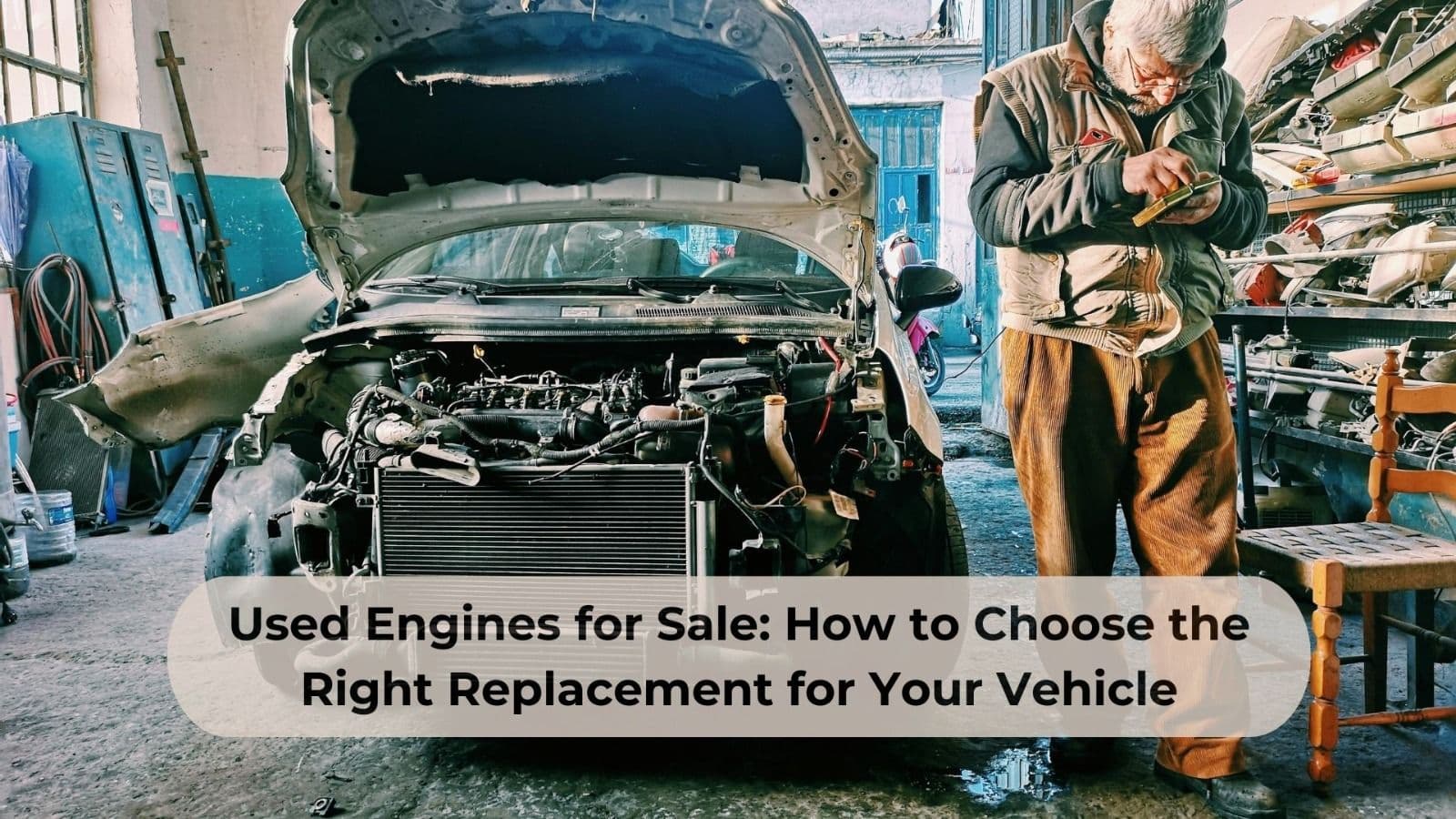
A no-crank condition does not prove the engine is seized. A weak battery, cable voltage drop, starter fault, control-circuit problem, seized accessory, liquid-filled cylinder, transmission or flexplate issue, or internal engine damage can all prevent normal cranking. Confirm which system is stopping rotation before buying a replacement engine.
First describe exactly what happens
“No crank,” “cranks slowly,” and “cranks but will not start” are different complaints.
- No crank: the starter does not rotate the engine.
- Single click or repeated clicks: the starter circuit attempts to operate, but available current or starter movement may be inadequate.
- Slow crank: the engine turns below normal cranking speed.
- Crank-no-start: the engine rotates but does not run.
- Partial rotation and stop: the crankshaft moves only part of a turn, which can indicate mechanical interference or liquid in a cylinder.
Record the sound, instrument-panel behavior, battery voltage, warning messages, recent repairs, fluid loss, overheating, water exposure, and whether the engine stopped while running. Do not repeatedly operate the starter against an engine that stops abruptly or may contain coolant, fuel, water, or oil in a cylinder.
Check the electrical starting system first
The starter needs adequate battery state of charge, low-resistance cable connections, sound grounds, a valid start command, and a functioning starter motor and solenoid. Interior lights or a normal-looking dashboard do not prove the battery can supply starter current.
A technician should test:
- Battery condition and state of charge
- Battery terminals and cable integrity
- Voltage drop on positive and ground circuits during a start attempt
- Starter relay, fuse, solenoid, and control circuit
- Park/Neutral or clutch-interlock inputs
- Immobilizer or security authorization
- Starter current draw and starter operation
- Engine and chassis grounds
A failed starter can lock mechanically or fail electrically. A damaged ring gear or flexplate can also affect engagement. Replacing the engine before checking the starting system risks solving the wrong problem.
Separate the engine from the accessories
The crankshaft drives accessories through one or more belts. An alternator, air-conditioning compressor, idler pulley, tensioner, water pump, supercharger, or another belt-driven component can seize and make the engine appear locked.
OEM engine-inspection procedures sometimes direct technicians to remove the accessory belt when a seized accessory is suspected before measuring crankshaft rotation. This is a diagnostic isolation step, not permission to run the engine without required drives.
With the engine off and handled safely, the technician can inspect belt condition and check the driven components using the vehicle manufacturer’s procedure. Hybrid systems, spring-loaded tensioners, high-voltage components, and tightly packaged engines may require special tools and precautions.
If the crankshaft rotates normally after the accessory drive is isolated, the long block may not be the failed component.
Verify crankshaft rotation correctly
A qualified technician can attempt to rotate the crankshaft by the approved point and in the specified direction after completing required safety steps. The correct tool, access point, spark-plug or injector procedure, transmission position, and allowable effort vary by engine.
The result should be documented:
- Does the crankshaft rotate through complete cycles?
- Is resistance smooth and repeatable?
- Does it stop at the same crank angle?
- Does it turn only after the accessory belt is removed?
- Is there abnormal metal noise or binding?
- Does the starter remain engaged with the ring gear?
- Is the transmission or torque converter creating interference?
Do not use an arbitrary torque limit from another model. Hyundai service information, for example, specifies a rotation test and documentation threshold for particular engines covered by a campaign. That number is not a universal definition of a seized engine.
Consider hydrolock when rotation stops abruptly
Liquids do not compress like the normal air-fuel charge. Coolant, fuel, water, or excess oil entering a cylinder can stop the piston and prevent rotation. This is commonly called hydrolock.
Possible clues include:
- Sudden stop during cranking
- Recent deep-water ingestion or flooded intake
- Unexplained coolant loss
- Coolant in engine oil or an overfilled-looking oil level
- Fuel odor or fuel dilution in oil
- White exhaust residue associated with coolant entry
- A washed-looking spark plug or glow plug
- Liquid visible in a cylinder
- Abnormal cooling-system pressure
- A prior intake, injector, EGR-cooler, head-gasket, or turbo-related fault
A General Motors bulletin for specific 2022 Duramax applications lists no-crank, coolant loss, coolant in oil, starter-circuit damage, and liquid in a combustion chamber among hydrolock indicators. It applies only to the identified models and engines, but it illustrates why a locked engine requires root-cause inspection rather than repeated starter attempts.
Removing spark plugs or injectors, extracting liquid, pressure-testing systems, and checking for bent connecting rods are professional procedures. Fuel and coolant can eject under pressure, and incorrect handling can cause injury, fire, contamination, or additional engine damage.
Inspect fluids before deciding on replacement
Check the engine-oil level and condition before disassembly. An unexpectedly high level can indicate fuel or coolant contamination. Metallic debris, heavy glitter, bearing material, or a low-oil history may support internal damage, but oil appearance alone is not a complete diagnosis.
Also document:
- Coolant level and condition
- Evidence of oil in coolant or coolant in oil
- External oil and coolant leaks
- Oil-filter contents when professionally inspected
- Prior low-oil-pressure or overheat warnings
- Water or debris in the intake tract
- Broken timing-drive or valvetrain components where accessible
- Evidence of a failed turbocharger feeding oil into the intake
Do not start an engine suspected of having contaminated oil or a liquid-filled cylinder merely to obtain more symptoms.
Timing, valvetrain, and internal damage
A broken or displaced timing belt or chain, damaged valve, failed bearing, broken connecting rod, damaged piston, or seized crankshaft can prevent rotation. Some failures allow partial movement; others lock completely.
A borescope inspection, oil-pan inspection, valve-cover inspection, timing inspection, oil-pressure history, or teardown may be required. The scope should be chosen from the vehicle-specific diagnostic procedure.
Evidence that can support complete engine replacement includes:
- Confirmed crankshaft seizure after starter, accessory, and external interference are ruled out
- Broken internal parts or block damage
- Bearing failure with extensive metal contamination
- Hydrolock that bent a connecting rod or damaged a piston, cylinder, crankshaft, or block
- Severe timing-event damage across multiple cylinders
- Cracked block or non-serviceable cylinder damage
- Repair findings showing the long block is not reasonably serviceable
A failed starter, seized compressor, damaged pulley, or recoverable control fault does not justify an engine replacement.
Ask for written evidence before ordering
Before approving a replacement, request:
- Battery and starting-circuit test results
- Starter current or bench-test findings where applicable
- Confirmation that accessories were isolated when required
- Crankshaft-rotation test method and result
- Spark-plug, glow-plug, injector, or cylinder findings if hydrolock was suspected
- Cooling-system, fuel-system, and intake inspection results
- Engine-oil level, condition, and contamination findings
- Borescope photos or internal inspection evidence
- Root cause of the failure
- Written reason the engine cannot be repaired economically or safely
- List of external components that must be inspected or transferred
- Plan to correct the root cause before the replacement starts
A diagnosis that says only “engine locked” is incomplete if it does not explain how the starter, accessories, liquid entry, and other external causes were excluded.
Match the replacement engine precisely
If complete replacement is justified, use the full VIN as a starting identifier. The VIN decoder can organize basic vehicle details, but final matching may also require the engine code, displacement, fuel type, aspiration, emissions configuration, production date, drive layout, sensor arrangement, and original part or casting numbers.
Review the used-engine replacement guide and ask the installer which components are transferred. A used long block may not include the intake, exhaust, turbocharger, starter, alternator, air-conditioning compressor, harness, control modules, sensors, flywheel or flexplate, fuel system, or emissions hardware.
Also identify programming, relearn, immobilizer, calibration, fluid, filter, cooling-system, and priming requirements before the engine ships.
No-crank engine buyer checklist
When requesting a replacement, prepare:
- Full VIN, year, make, model, trim, and build date
- Exact engine code and original identification
- Written no-crank diagnosis and test results
- Root cause of internal failure or hydrolock
- Photos of labels, castings, connectors, and damaged areas
- Required assembly scope: short block, long block, or complete dressed engine
- List of included and transferred accessories
- Intake, fuel, oil, cooling, exhaust, and turbo inspection plan
- Contamination-cleanup requirements
- Installer’s programming and startup procedure
- Delivery location and unloading capability
Once those facts are verified, include them in a used-engine quote request. The symptom alone is not enough to select the correct engine.
Frequently asked questions
Does a clicking starter mean the engine is seized?
No. Clicking can result from a weak battery, poor connection, relay or solenoid fault, starter problem, or a mechanically locked load. Test the starting circuit and crankshaft separately.
Can a seized air-conditioning compressor stop the engine from cranking?
A locked belt-driven accessory can prevent or severely resist crankshaft rotation on some layouts. Isolate the accessory drive according to the manufacturer’s procedure before condemning the engine.
Can hydrolock be repaired without replacing the engine?
Sometimes liquid entry is found before permanent internal damage occurs. Other cases bend rods, damage pistons, bearings, cylinders, or the block. Inspection and measurement determine the repair scope.
Can I test a locked engine by repeatedly turning the key?
No. Repeated starter attempts can overheat cables or the starter and may worsen mechanical damage. Stop and diagnose the cause.
Does a crankshaft that turns by hand prove the engine is good?
No. It helps show the engine is not fully seized at that moment, but compression, oil pressure, timing, bearings, cylinders, and other systems may still have faults.
Prove the long-block failure before buying
A vehicle that will not crank needs an orderly diagnosis: electrical supply, starter, accessory drive, crankshaft rotation, liquid entry, fluids, timing, and internal condition. Buy a replacement engine only after the evidence shows the long block is the failed assembly and the original cause has a repair plan.