Car Maintenance & Repair · Oct 18, 2026
Clicking While Turning: CV Axle, Wheel Bearing or Complete Assembly?
Learn how to separate CV axle clicking from hub, wheel-bearing and complete axle problems before ordering parts.
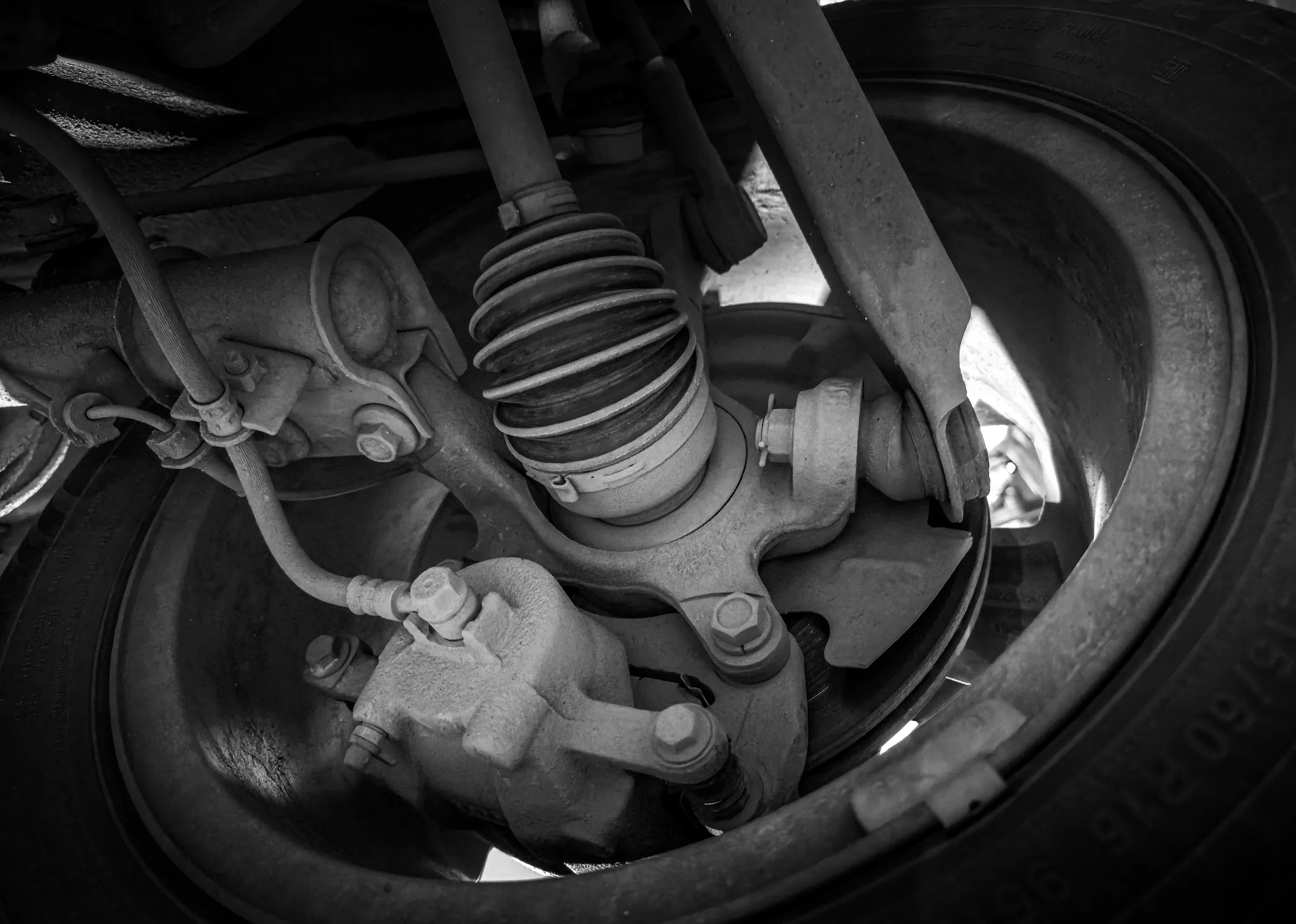
Clicking while turning often points toward a CV axle or joint, but the sound alone does not prove which shaft—or whether the shaft needs replacement at all. The noise must be reproduced under controlled conditions, localized to a side and separated from the hub, wheel bearing, brakes, steering, suspension and differential before a buyer orders an axle shaft or complete assembly.
The driving condition is part of the diagnosis
Describe exactly when the click occurs. Useful distinctions include:
- Sharp turns under light acceleration
- Full-lock turns such as a parking maneuver or U-turn
- Straight-line takeoff or acceleration
- One click when changing from drive to reverse
- Repetitive clicking that follows wheel speed
- A growl or hum that changes when the vehicle is steered
- Noise only after the vehicle sits in cold weather
- Noise accompanied by vibration, grease leakage or an ABS warning
These patterns are clues, not universal verdicts. Toyota documented a clicking condition on certain 2015–2021 Corolla vehicles during turns greater than 90 degrees while accelerating at full steering lock. Honda published a vehicle-specific bulletin for some 2007–2010 Odyssey models with front clunking, popping or clicking while turning. Both procedures direct technicians toward drive-shaft or CV-joint repairs, but only after the listed condition and application are confirmed.
Other manufacturer information shows why “click means replace the CV axle” is too simple. Nissan published a procedure for clicking from some front or rear CV-type axles during takeoff or acceleration that addresses the axle-to-hub bearing surfaces without removing the axle from the transmission. GM has also described cold-weather turning clicks on certain electric vehicles where technicians first reproduce the condition and inspect the drive axles and boots; when no damage is found, that bulletin does not call for parts replacement.
The lesson is application-specific: match the symptom, VIN and current manufacturer procedure before selecting a repair.
What a technician should inspect
A visual and hands-on inspection can reveal evidence that the road-test sound cannot.
CV axle and joints
Inspect the inner and outer boots for splits, loose clamps, impact damage and grease sling. Check the shaft for obvious damage and the joints for abnormal movement according to the service manual. A damaged boot can allow lubricant out and contamination in, but a greasy area alone does not identify which joint is noisy.
Axle-to-hub interface
Check the axle nut, splines and mating hub surfaces using the specified procedure. Do not reuse torque values from another model. Some fasteners are one-time use, and incorrect tightening can affect the hub or bearing.
Wheel bearing and hub
A wheel bearing more commonly produces a hum, growl or roughness, but noises vary. Inspect for play and roughness using the vehicle manufacturer’s method. Steering load can change bearing noise, which may lead a driver to describe it as a turning-related axle sound.
Brakes, steering and suspension
A backing plate, loose brake hardware, worn ball joint, tie-rod end, strut mount or other suspension component can click or pop as steering and load change. Confirm these parts before ordering driveline components.
Differential and mounts
Clicks or clunks during takeoff, reverse engagement or load changes may involve driveline lash, mounts or the differential rather than the outer CV joint. Inspect the full torque path when the noise is not specifically tied to steering angle.
Axle shaft or complete axle assembly?
For many independent-suspension vehicles, a CV axle—also called a half shaft or drive-shaft assembly—is an individual shaft between the transmission or differential and the wheel hub. A complete axle assembly can mean a much larger housing that may include a differential, axle shafts, hubs, brakes, sensors or suspension attachments.
If diagnosis isolates one CV joint and the service part is a complete shaft, an individual shaft assembly may be the appropriate purchase. A full housing or beam is usually a different repair scope. It becomes relevant when the housing, differential, mounting structure or several integrated components are damaged.
Review the axle assembly versus axle shaft fitment checklist before ordering. It explains the identification, position, drive layout, gear ratio and included-component questions that change interchange.
Buyer checklist before ordering
Ask the repair shop and supplier to confirm:
- Full 17-character VIN and production information.
- Whether the requested part is a CV axle, axle shaft, intermediate shaft, hub, differential or complete axle assembly.
- Front or rear position and left or right side.
- Front-wheel, rear-wheel, all-wheel or four-wheel-drive configuration.
- The exact maneuver, speed, temperature and load that reproduce the noise.
- The side and component to which the noise was localized.
- Boot condition, grease loss, joint play and visible shaft damage.
- Hub, bearing, axle-nut, brake, steering and suspension inspection results.
- Original part number, tag, stamp and relevant physical dimensions.
- Spline count, seal surface, tone ring, ABS sensor and connector configuration when applicable.
- Gear ratio and differential type if buying a complete driven axle.
- New seals, nuts, clips or other one-time-use hardware required by the service procedure.
- Alignment, fluid, calibration or ABS-related steps required after installation.
- A written list of everything included with the used part.
Use the VIN decoder to organize the vehicle identity, but confirm the original part markings and approved interchange as well. Once the diagnosis and fitment data are complete, include them with the parts quote request.
Frequently asked questions
Does clicking on a turn always mean the outer CV joint is bad?
No. It is a common possibility, but hub interfaces, brakes, steering, suspension and application-specific conditions can produce similar noises. Reproduce and localize the sound first.
Can a torn CV boot be repaired without replacing the axle?
That depends on how long the boot has been damaged, whether contamination entered, the condition of the joint and the manufacturer’s service options. A new boot cannot reverse joint wear.
Should both CV axles be replaced together?
Not automatically. Replace or repair the components supported by diagnosis and the service procedure. Age alone does not prove the opposite shaft has failed.
Can the wrong axle cause an ABS warning?
It can if the replacement has an incompatible tone ring, encoder, sensor arrangement or geometry. Match the ABS-related hardware and connectors before installation.
Is an axle shaft the same as a complete axle assembly?
No. An axle shaft is one torque-transmitting shaft. A complete assembly may include the housing, differential, shafts and attached hardware. Confirm the seller’s exact definition in writing.